Argyll Substation (500)
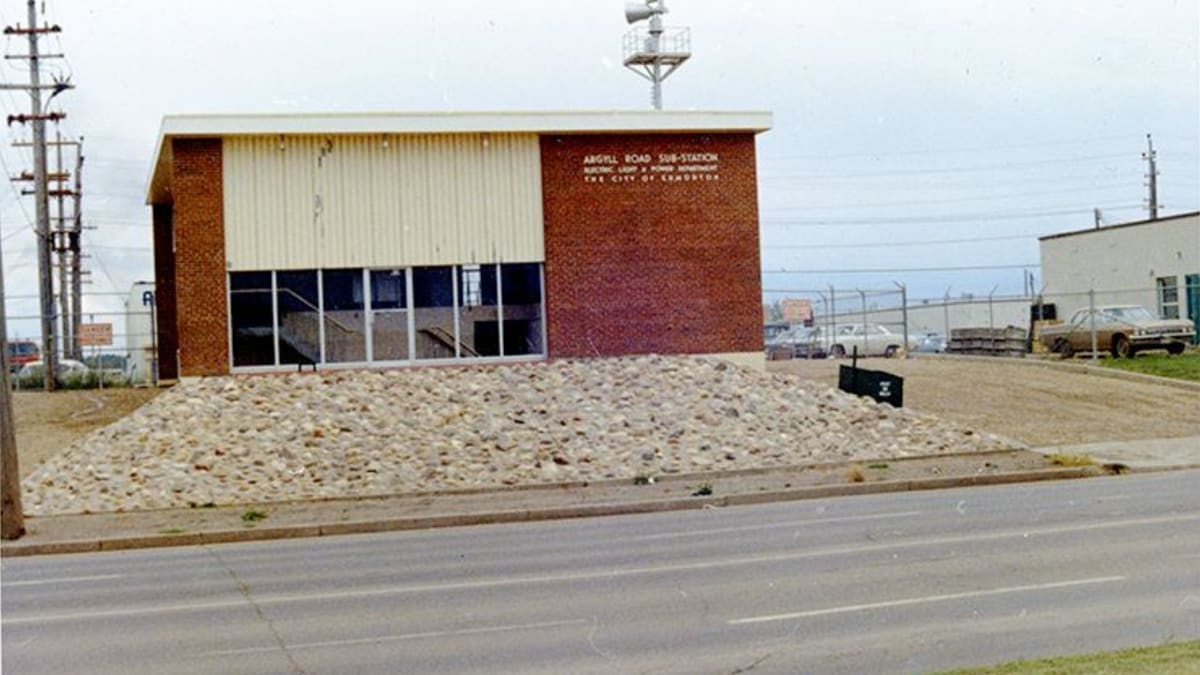
This electrical substation was built at a time of expansion in the city's residential and industrial areas, and expansion with city-owned utilities.
Details
- Built
- 1957
- Neighbourhood
- TBD
- Historic designation
- Unknown
- Time period
- The Post War Years: 1946-1970
- People
- TBD
- Architectural styles
- International
- Character defining elements
- Brick Cladding, Exposed Steel Frame, Flat Roof, Glass Block, One Storey, Square Footprint, Stucco Cladding, Terrazzo
Location
About
Substations are distribution centres scattered throughout the city where electricity is transformed to lower voltages for use in residential homes. Besides allowing for conversion from 13,200 V to 2,300 V at the substation and then 110 V at a home, a substation also allowed linemen to repair parts of the network without shutting down the main power line. In 1938 there were only seven substations in the city. By the early 1950s voltage distribution was increased from 2,300 V to 4,169 V and new substations were built with modern failsafes to handle this increase.
These utilitarian industrial buildings were solidly built to house their equipment but they also varied in their architectural designs. Art Baird, formerly of Edmonton Power, in an interview for Candles to Kilowatts: The Story of Edmonton's Power Company stated that "substation buildings are designed to blend in with their local surroundings." Some blended in as suburban bungalows or brick office buildings. The Argyll Substation was built when the city was expanding southeast and neighbourhoods like Argyll needed power, and light industrial subdivisions like Coronet Addition Industrial could house those power distribution centres. As such, this brown brick and light, stucco building, built at the same time as the Alberta Avenue and Namao substations, was designed in an International architectural style. The structure has a square footprint and flat roof. Clean horizontal lines are evident in the broad overhangs and paneled composition. Glass blocks and large windows in clear anodized aluminum frames allow visibility into the building. Inside, exposed frames, polished terrazzo floors and stairs, and 1950s style handrails are likewise typical of International buildings.