Capitol Theatre
The Capitol Theatre was Edmonton's first dedicated movie house.
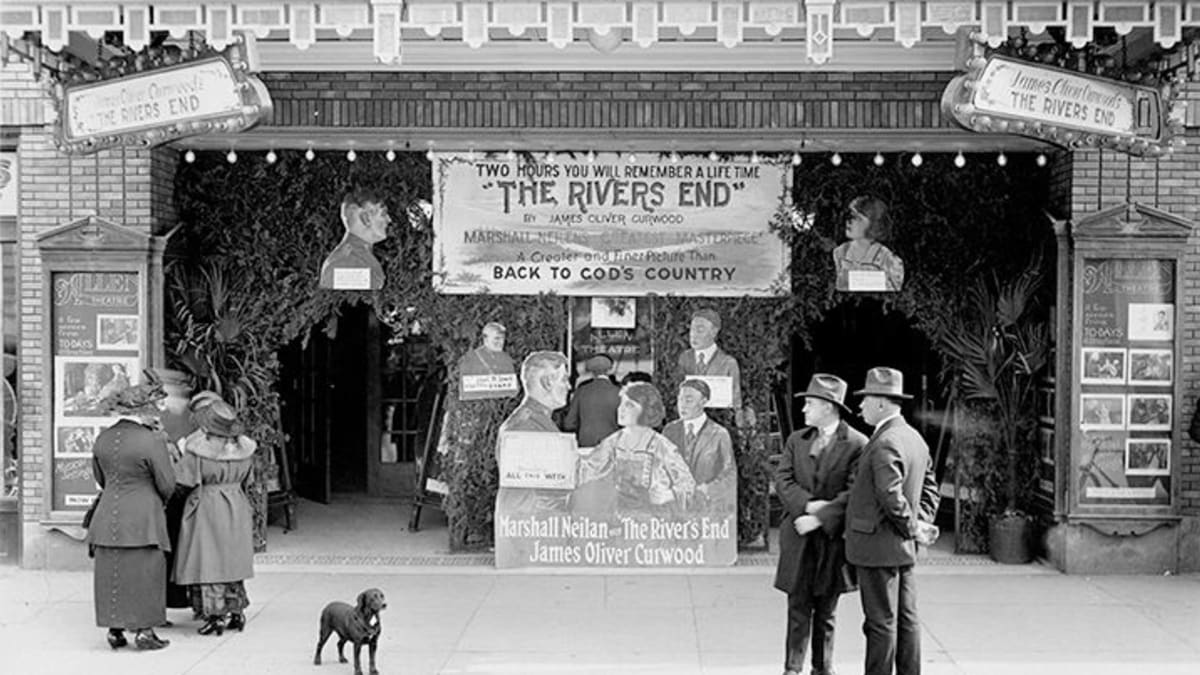
Details
- Historic designation
- Demolished
- Time period
- The War Years: 1914-1945
- Architectural styles
- Edwardian
- Character defining elements
- Brick Cladding, Cornice, False Front, Flat Roof, Marquee Sign, Parapet, Poured Concrete Structure, Proscenium, Rectangular Footprint, Two Storeys
Location
About
This building opened in 1918 as the Allen Theatre. Designed for Famous Players by architect H. L. Gage, this two-storey building was constructed of concrete with brick cladding. The trim, including mouldings over the two entrance arches, ornamental lozenges, and window sills, were cast in concrete. The flat roof was edged along the front elevation with a precast concrete cornice topped by a brick false front. Inside, the auditorium curved towards the stage, giving every seat an unobstructed view of the screen.
In 1929, Famous Players closed the theatre, by now called the Capitol Theatre, for three months to install sound equipment for the new "talkies" and to add a balcony, giving the threatre an additional 500 seats. They also added an electric sign and marquee, and hired noted Montreal theatre designer Emmanuel Briffa to redecorate the interior of the theatre. The sumptuous new interior featured ceilings and walls finished with antique gold with decorated stairways leading up to a spacious lounge outside the new balcony area. The ticket office was relocated and expanded, making the lobby more comfortable for patrons and reducing wait times. When the renovations were complete, the Capitol Theatre became the first theatre in Edmonton to show movies with sound.
An additional renovation in 1938, desinged by Magoon and MacDonald, saw the installation of air conditioning and a 2000-light marquee, the largest in Western Canada, including a large vertical sign in the the Moderned style. The 2000 60-watt bulbs generated so much heat that the sidewalk in front of the theatre stayed snow and ice-free amost all winter.
In 1954, the theatre was renovated and modernized once again, this time by the architectural firm Dewar-Stevenson & Stanley. However, the movie industry was changing: by the 1970s the larger theatres were no longer profitable, and the Capitol Theatre was demolished in 1972. A scaled-down replica of the 1929 version on the theatre was built at Fort Edmonton Park in 2011.